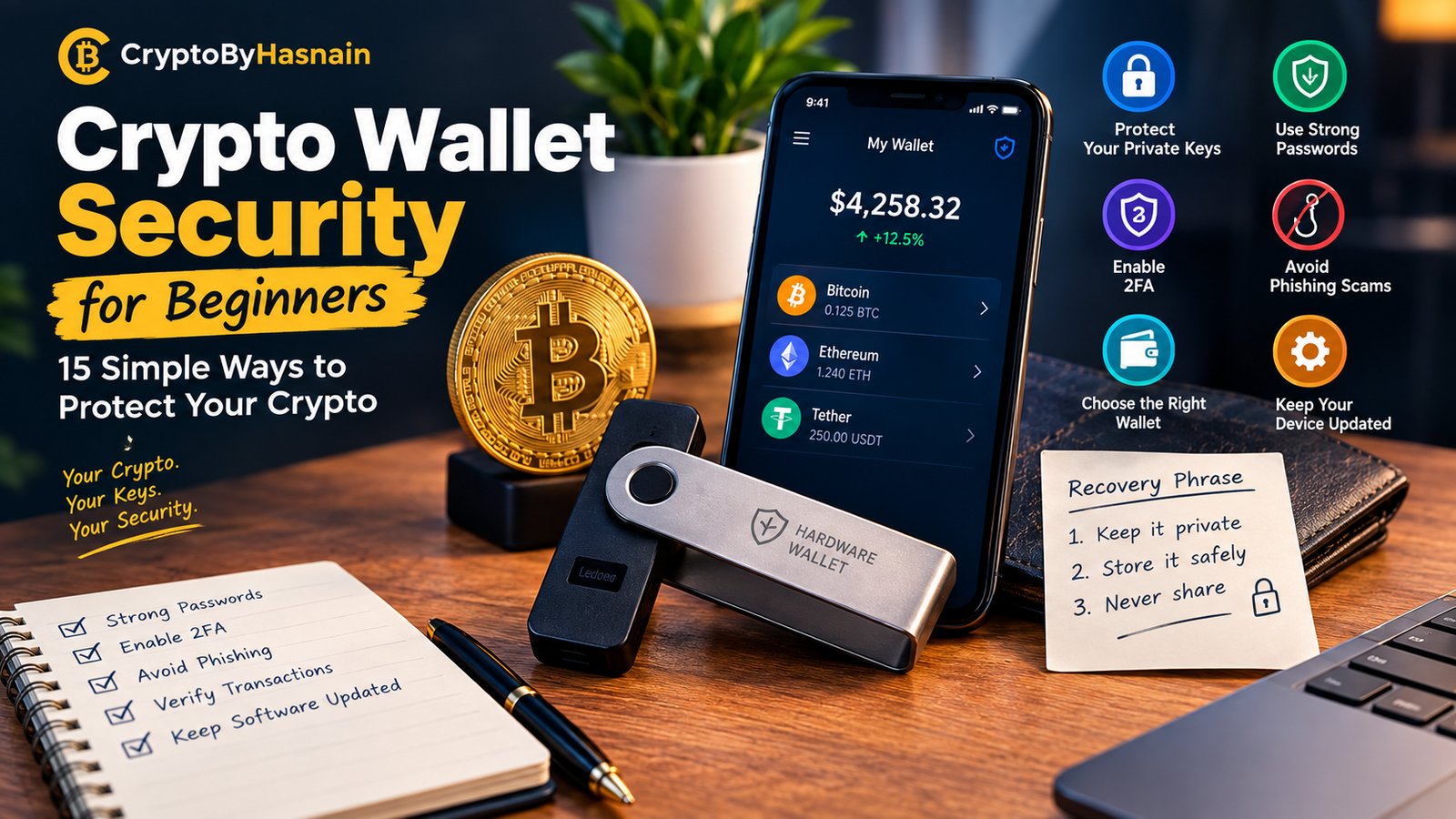
Once you start trading or investing in digital assets, knowing how to store your funds safely matters just as much as knowing when to buy or sell. Exchanges make trading easy, but leaving a large balance on one exposes you to counterparty risk, exchange hacks, and sudden account locks. If you want full control over your digital wealth, picking one of the best crypto wallets for beginners is the first step you should take.
A crypto wallet doesn’t hold your coins in any physical sense. What it actually stores are your private keys, the cryptographic passwords that give you access to your funds on the blockchain. In this guide to the best crypto wallets for beginners, we’ll look at how wallets work, compare hot wallets with cold wallets, go through some top recommendations, and cover the security habits that keep your assets safe.
What Is a Crypto Wallet and How Does It Work?
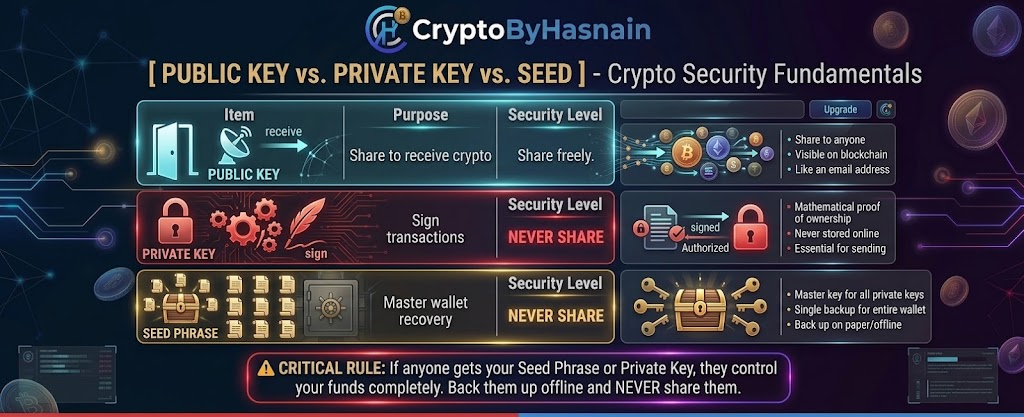
Before you compare the best crypto wallets for beginners, it helps to understand what’s happening behind the scenes. A bank account works very differently from a crypto wallet, which relies on a pair of cryptographic keys:
- Public key (public address): Think of it as your bank account number or email address. You can share it openly so other people can send you payments or transfers.
- Private key: This is more like your online banking password or PIN. It proves that the funds belong to you and lets you sign transactions. Whoever holds your private key controls your assets.
- Seed phrase (recovery phrase): A readable list of 12 or 24 random words created when you set up a wallet. It works as a master backup, and it can restore every private key linked to your wallet.
Custodial vs. Non-Custodial Wallets
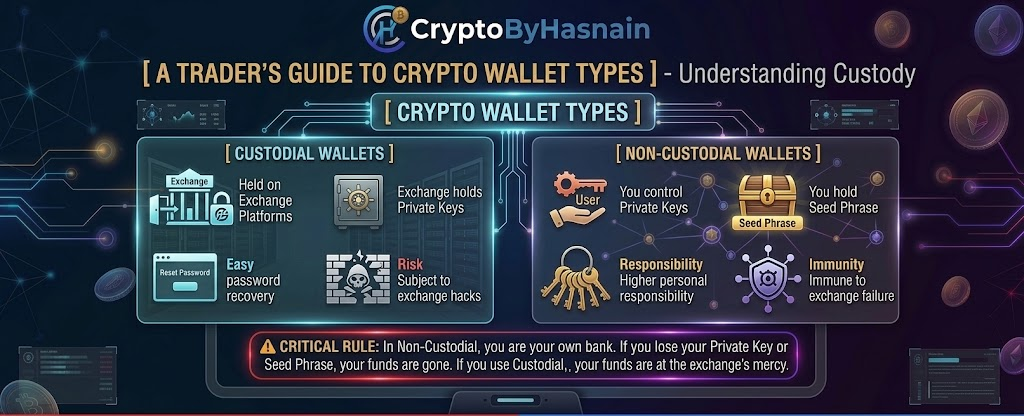
As you look through the best crypto wallets for beginners, you’ll notice they fall into two main camps when it comes to who actually controls your funds: custodial and non-custodial.
Custodial Wallets
Custodial wallets are managed by third-party centralized exchanges. While convenient for quick trading, you do not own the underlying private keys. If the platform experiences financial distress or security breaches, your capital could be compromised.
Non-Custodial Wallets
Non-custodial wallets give you 100% control over your private keys and seed phrase. The crypto slogan “Not your keys, not your coins” emphasizes why security experts recommend non-custodial options when choosing the best crypto wallets for beginners.
Hot Wallets vs. Cold Wallets Explained
Wallets are further categorized based on whether they connect to the internet. Understanding this distinction is vital when researching the best crypto wallets for beginners.
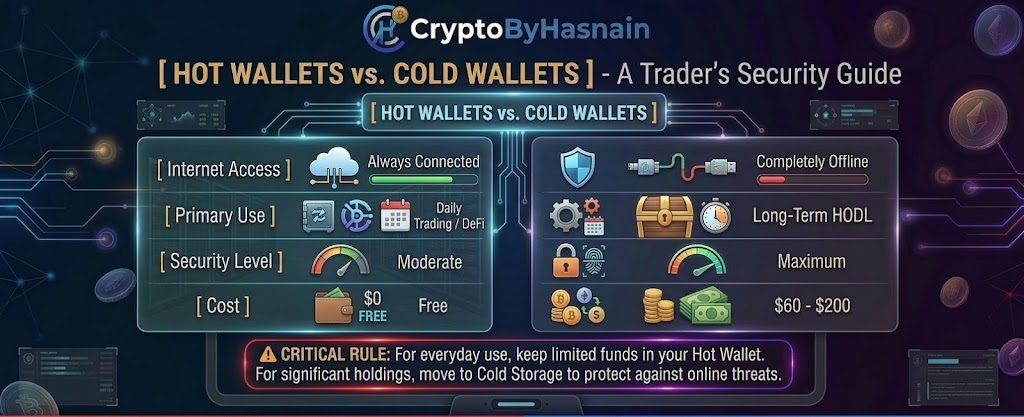
Hot Wallets (Software Wallets)
Hot wallets run on devices that are connected to the internet, such as smartphones, laptops, and browser extensions. They’re built for convenience, which makes them handy for everyday transactions, token swaps, and using Web3 apps.
Cold Wallets (Hardware Wallets)
Cold wallets are physical devices that keep your private keys completely offline, away from online malware and keyloggers. Most lists of the best crypto wallets for beginners treat them as the gold standard.
Top 5 Best Crypto Wallets for Beginners Reviewed
Below is a closer look at the software and hardware options that most often earn a place among the best crypto wallets for beginners, judged on ease of use, security features, and how much the community trusts them.
1. MetaMask (Best Hot Wallet for Web3 and DeFi)
MetaMask is one of the most widely used software wallets in crypto. You can run it as a browser extension or as a mobile app.
- Type: Non-custodial software wallet (hot wallet)
- Supported networks: Ethereum, BNB Chain, Polygon, Arbitrum, Avalanche, and custom EVM networks
Why it’s one of the best crypto wallets for beginners:
- The interface is easy to follow if you’re just starting with decentralized finance (DeFi) and token swaps.
- Setup is simple, and the seed phrase is generated for you.
- It connects directly to decentralized applications (dApps).
2. Trust Wallet (Best Mobile Wallet for Multi-Chain Assets)
Trust Wallet is a flexible mobile wallet owned by Binance. It supports millions of tokens across dozens of blockchains.
- Type: Non-custodial mobile wallet (hot wallet)
- Supported networks: 100+ blockchains, including Bitcoin, Ethereum, Solana, and Cardano
Why it’s one of the best crypto wallets for beginners:
- The design is clean and mobile-first, and it works on both Android and iOS.
- Built-in staking lets you earn interest on your holdings without leaving the app.
- A native Web3 browser makes it easy to use decentralized exchanges.
3. Exodus (Best Desktop Wallet for User Interface)
Exodus has a reputation for one of the cleanest, best-looking interfaces of any crypto wallet.
- Type: Non-custodial software wallet (desktop and mobile)
- Supported networks: 500+ digital assets
Why it’s one of the best crypto wallets for beginners:
- The dashboard is visual and easy to read, with portfolio pie charts and real-time tracking.
- You can swap one crypto for another inside the app with a single click.
- It works smoothly with Trezor hardware wallets and supports backup integration with them.
4. Ledger Nano S Plus / Nano X (Best Cold Wallet for Maximum Security)
Ledger is a global leader in hardware wallet security. Its devices generate your seed offline and protect it with certified secure element chips.
- Type: Non-custodial hardware wallet (cold wallet)
- Supported networks: 5,500+ coins and tokens through the Ledger Live app
Why it’s one of the best crypto wallets for beginners:
- Your keys stay on a physical chip that never touches the internet.
- Every outgoing transaction needs a physical button press to approve it.
- Its companion app, Ledger Live, gives you one friendly place to manage your assets safely.
5. Trezor Model One / Safe 3 (Best Open-Source Hardware Wallet)
Trezor launched the first crypto hardware wallet ever made, and both its hardware and software are fully open source.
- Type: Non-custodial hardware wallet (cold wallet)
- Supported networks: 1,000+ cryptocurrencies
Why it’s one of the best crypto wallets for beginners:
- Its code is open, so the global cybersecurity community audits it on an ongoing basis.
- A simple two-button interface is used to confirm transactions.
- Wallet isolation features help protect you from malware on the computer you connect it to.
Comparison Summary: Best Crypto Wallets for Beginners
To help you decide which one suits your own financial plans, here’s a side-by-side look at the best crypto wallets for beginners:
| Wallet name | Wallet category | Platform compatibility | Cost | Ideal user |
|---|---|---|---|---|
| MetaMask | Hot / non-custodial | Chrome, iOS, Android | Free | DeFi and Ethereum beginners |
| Trust Wallet | Hot / non-custodial | iOS, Android, extension | Free | Multi-asset mobile users |
| Exodus | Hot / non-custodial | Windows, Mac, iOS, Android | Free | Desktop portfolio tracking |
| Ledger Nano S Plus | Cold / non-custodial | USB, desktop, Android | ~$79 | Long-term HODLers who want top security |
| Trezor Safe 3 | Cold / non-custodial | USB, desktop, Android | ~$79 | Privacy and open-source fans |
Step-by-Step Guide: How to Securely Set Up Your First Wallet
Whichever software or hardware option you pick from the best crypto wallets for beginners, setting it up safely means following a few strict security steps:
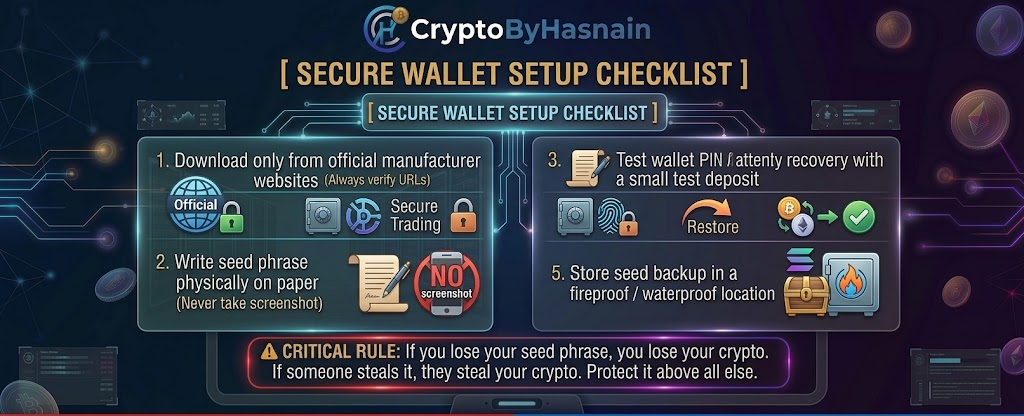
- Download from official sources only: Always double-check the website URL before you download any software or browser extension. Stay away from third-party app stores and links you don’t trust.
- Write your seed phrase down on paper: Never keep it in a text file, cloud storage, an email, or a screenshot on your phone. Store it on paper or, even better, on a steel backup plate.
- Set up strong device security: Use a strong PIN or password, and turn on biometric unlock if you’re on a mobile device.
- Send a small test transaction: Before you move your full balance, send a small amount first. This confirms that the receiving address and the network you selected actually work.
Essential Security Rules to Prevent Crypto Theft
Even with the best crypto wallets for beginners, human error is still the number one reason people lose their assets. These rules will help keep you protected:
- Beware of phishing websites: Fake exchange and wallet sites copy the look of real ones in order to steal your private keys. Bookmark the verified URLs and use only those.
- Never share your seed phrase: No genuine support agent, exchange employee, or admin will ever ask for your 12 or 24-word recovery phrase.
- Double-check wallet addresses: Use your wallet’s address verification feature before you confirm a transaction. Malware can quietly change the address you copied to your clipboard.
- Disconnect inactive Web3 sessions: Once you’ve finished a token swap, disconnect your software wallet from the dApp or website.
Conclusion
Choosing among the best crypto wallets for beginners comes down to how often you trade, how much you’ve invested, and what you want from your security setup. If you trade daily or spend a lot of time in Web3, hot wallets such as MetaMask or Trust Wallet give you quick, flexible access. For protecting your money over the long term, though, moving your funds to a hardware cold wallet like Ledger or Trezor is still the safest route.
When you take control of your private keys and stick to careful backup habits, you lay a secure foundation for growing and protecting your digital wealth.
Disclaimer: Content published on Cryptobyhasnain is for informational and educational purposes only and should not be construed as financial advice. Always do your own research before making any investment decisions.