

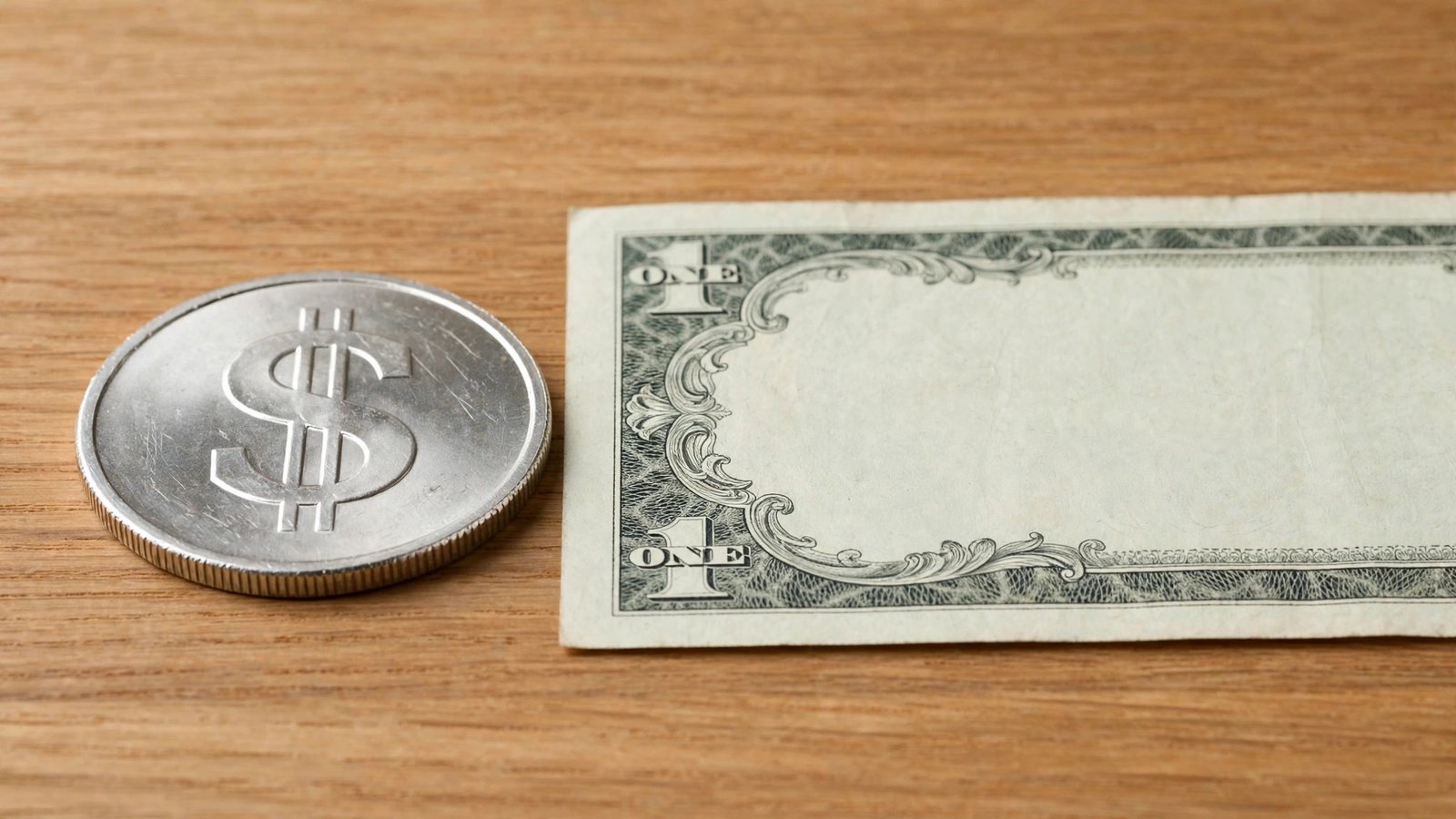
Cryptocurrency is famous for wild price swings — a coin can soar on Monday and crash on Friday. So it surprises many beginners to learn that some of the most used cryptocurrencies in the world are designed to do the opposite: stay boringly steady at exactly one dollar. These are called stablecoins, and they quietly power a huge share of all crypto activity.
In this guide we will answer the essential questions: what are stablecoins, how do they manage to hold their value, what are they used for, and — just as important — what can go wrong with them. No hype, just a clear explanation.
What Are Stablecoins?
A stablecoin is a cryptocurrency designed to maintain a stable value by being tied (“pegged”) to a real-world asset — most commonly the US dollar. One unit of a dollar stablecoin is meant to always be worth $1, the way a casino chip is meant to always be worth its printed value while you are inside the casino.
That casino analogy is worth keeping. A chip has value because the casino promises to exchange it for cash at the counter, and because everyone inside accepts it at face value. Stablecoins work on a similar principle of backing and redemption — except the “casino” is a company or a computer program, and the chips move on a blockchain, anywhere in the world, in minutes.
Well-known examples include Tether (USDT) and USD Coin (USDC), the two largest dollar stablecoins, and DAI, a stablecoin managed by a decentralized system rather than a single company.
How Do Stablecoins Stay Stable?
Keeping a digital token at exactly $1 takes a mechanism. There are three main designs, and understanding them explains both the strengths and the risks.
1. Fiat-backed stablecoins
Companies like the issuers of USDC and USDT say they hold reserves — cash and short-term US government bonds — equal to the value of the coins they have issued. If you hold 1,000 of their tokens, in theory $1,000 of assets sits in reserve behind them, and the issuer promises redemption at $1 each. This model is simple and has proven the most durable, but it requires trusting the company and its reporting about those reserves.
2. Crypto-backed stablecoins
DAI is the famous example. Instead of dollars in a bank, users lock up other cryptocurrency (worth more than the stablecoins they create) inside a smart contract. If the collateral’s value falls too far, the system automatically sells some to protect the peg. No single company holds your money, but the machinery is complex and depends on volatile collateral behaving as programmed.
3. Algorithmic stablecoins
These try to hold the peg using only software rules that expand and shrink the supply — no real reserves. It is an elegant idea that has repeatedly failed in practice. The most dramatic collapse was TerraUSD (UST) in May 2022, which lost its peg and wiped out tens of billions of dollars in days. Beginners should treat unbacked algorithmic designs as extremely risky experiments.
What Are Stablecoins Used For?
- Trading: Traders move into stablecoins to “sit on the sidelines” during market storms without converting back to bank money, then re-enter quickly when they choose.
- Fast, cheap transfers: Sending $500 in stablecoins across the world can take minutes and cost cents — compared with days and hefty fees through traditional international transfers.
- Remittances and payments: Families and freelancers increasingly receive pay in stablecoins, especially where local banking is slow or local currency inflation is high.
- Access to dollars: In countries with capital controls or unstable currencies, dollar stablecoins give ordinary people a practical way to hold dollar value on a phone.
- Earning yield in crypto apps: Decentralized finance platforms pay interest-like returns for lending stablecoins. These returns come with real risk — they are not bank interest and are not insured.
Stablecoins vs. Money in a Bank
It is tempting to see a stablecoin as “a dollar in an app,” but the differences matter. Bank deposits in many countries are government-insured up to a limit; stablecoins are not insured at all. A bank account cannot drop to $0.60 by Friday; a stablecoin can if its peg breaks or its issuer fails. On the other hand, stablecoins move 24/7, settle in minutes, and work across borders without permission. Think of them as a useful tool with a different risk profile — not as a savings account replacement.
The Risks of Stablecoins
- Depegging: Stablecoins occasionally slip from $1. Even USDC briefly fell to about $0.87 in March 2023 when part of its reserves were caught in a bank failure — it recovered, but the episode proved no stablecoin is risk-free.
- Issuer and reserve risk: With fiat-backed coins, you trust the issuer to actually hold safe, sufficient reserves. Transparency varies by issuer.
- Regulatory risk: Governments worldwide are writing stablecoin rules right now. New laws could change how issuers operate — generally aiming to make them safer, but change itself creates uncertainty.
- Freezing: Major issuers can freeze tokens at specific addresses (for example, when ordered by authorities). Your stablecoins are not as censorship-proof as Bitcoin.
- Platform risk: Leaving stablecoins on an exchange or lending app exposes you to that platform’s security and solvency.
How to Choose a Stablecoin
If you ever hold stablecoins, choosing carefully matters more than chasing the highest yield advertised anywhere. Prefer stablecoins from issuers that publish regular, independent reports on their reserves, and that hold those reserves in cash or short-term government bonds rather than risky assets. Check how long the coin has held its peg, including through past market crashes — a stablecoin that survived 2022’s storms has a stronger track record than a new launch. Consider where you will use it: the largest stablecoins are accepted on virtually every exchange and app. And whatever you choose, spread your risk — holding your entire balance in a single stablecoin, on a single platform, concentrates every risk in one place.
Frequently Asked Questions
Are stablecoins safe?
They are safer from price swings than Bitcoin, but not “safe” in the bank-deposit sense. They carry issuer, reserve, and regulatory risks, they are not government-insured, and pegs have broken before. Hold them with the same caution as any crypto asset.
Can I make money from stablecoins?
A dollar stablecoin held plainly should stay at $1 — you do not gain from price movement. Some platforms pay yield for lending them, but that yield exists because there is risk involved. If a return sounds unbelievable, it usually is.
What is the difference between USDT and USDC?
Both aim for $1 and are fiat-backed, but they are issued by different companies (Tether and Circle respectively) with different reserve practices and transparency reports. They run on many of the same blockchains and are the two largest stablecoins by market size.
Why not just use real dollars?
Often, you should — dollars in an insured bank account are the lower-risk option at home. Stablecoins earn their place when you need money that moves on crypto rails: fast international transfers, trading on crypto platforms, or dollar access where banking falls short.
Conclusion
What are stablecoins? They are cryptocurrencies engineered to hold a steady value — usually $1 — through reserves, collateral, or algorithms. The best-backed ones have become essential plumbing for crypto trading and global payments, moving billions of dollars daily. But “stable” describes their goal, not a guarantee: issuers can fail, reserves can wobble, and pegs have broken. Use them knowingly, prefer the most transparent issuers, and never treat them as insured savings.
Disclaimer: This article is for educational purposes only and is not financial advice. Cryptocurrency is volatile and high-risk — never invest money you cannot afford to lose.