

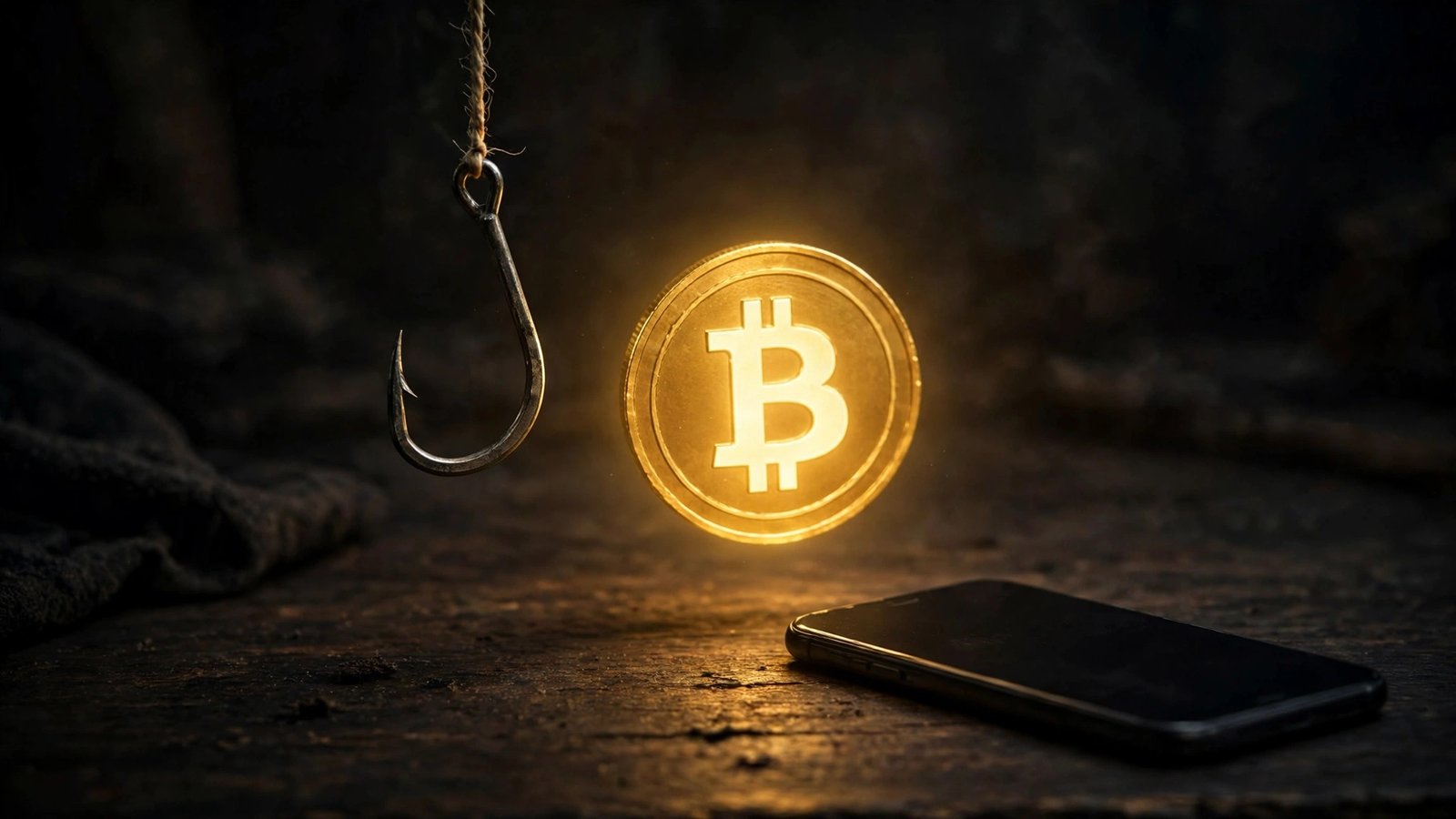
Imagine getting an exciting message from a friendly stranger: “I turned $500 into $50,000 with one simple crypto trick — send me your coins and I’ll do the same for you.” It sounds like winning the lottery without buying a ticket. In reality, it is the digital version of a stranger at a bus stop offering to double your cash if you just hand it over. Crypto scams work because they dress old-fashioned fraud in new technology — and beginners are the number one target.
The good news is that nearly all common crypto scams follow recognisable patterns. Once you learn the nine tricks in this guide, they become surprisingly easy to spot. Read this before you buy your first coin, and share it with anyone you know who is starting out.
Why Crypto Scammers Target Beginners
Crypto has three features scammers love. Transactions are usually irreversible — there is no bank to call and no chargeback button. The technology is new and confusing, so beginners cannot tell normal steps from dangerous ones. And the whole space is surrounded by stories of people getting rich, which makes “too good to be true” offers feel plausible. Every scam below exploits at least one of these. Now let’s meet them.
The 9 Most Common Crypto Scams
1. The “Send Coins, Get Double Back” Giveaway Scam
Fake social media posts — often from accounts impersonating famous people or companies — promise to double any crypto you send to a wallet address. This is always a scam, one hundred percent of the time. No company, celebrity, or exchange runs giveaways that require you to send money first. Money sent is money gone.
2. Fake Exchanges and Fake Apps
Scammers build websites and apps that look identical to famous exchanges. You deposit money, see a fake balance grow, and discover the truth only when withdrawals are blocked unless you pay a “release fee” — which is also stolen. Protect yourself by typing the real website address yourself, downloading apps only from official app stores, and checking reviews and the developer name carefully.
3. Phishing: Fake Emails, Messages, and Support Staff
A message claims your account is “at risk” and urges you to click a link and enter your login or wallet recovery phrase. Real companies never ask for your password or seed phrase — that phrase is the master key to your wallet, and anyone who asks for it is trying to rob you. Always go to the official website directly instead of clicking links in messages.
4. Romance and “Pig Butchering” Scams
A friendly stranger from a dating app or social media slowly builds a relationship, then mentions their amazing crypto profits and offers to teach you. Victims are guided to fake trading platforms and encouraged to deposit more and more. The “profits” are imaginary and the money is stolen. Rule of thumb: anyone you met online who steers conversation toward investing is a scammer until proven otherwise.
5. Rug Pulls and Hype Tokens
Fraudsters launch a brand-new coin, hype it heavily with influencers and promises, wait for beginners to pile in, then vanish with the money — the price collapses to nearly zero. Warning signs include anonymous teams, promises of guaranteed returns, pressure to buy quickly, and coins you can buy but mysteriously cannot sell. Brand-new, unknown tokens are the riskiest corner of crypto.
6. Ponzi and “Guaranteed Daily Profit” Schemes
These platforms promise steady, unrealistic returns — “1% per day, guaranteed!” — and may even pay early users using money from later users, exactly like a classic Ponzi scheme. It feels real until it suddenly collapses. Arithmetic is your shield: no legitimate investment on Earth can guarantee high daily returns. Guaranteed profit in crypto does not exist.
7. Fake Jobs and Task Scams
You are offered easy online work — liking videos, reviewing products — and paid small amounts at first to build trust. Then comes a “bigger task” requiring you to deposit your own crypto to unlock earnings. That deposit is stolen. Real employers never require workers to pay money to do a job.
8. Impersonation of Friends, Admins, and Support
In community chats and messaging apps, scammers copy the name and photo of a group admin, a company support agent, or even your friend, then message you privately offering “help.” Real admins and support teams do not private-message you first with offers or ask you to “verify” your wallet on a special website. Always check the exact username — scammers use near-identical spellings.
9. Malicious Wallet Approvals and Fake Airdrops
A website offers a free token drop (“airdrop”) or an exciting new service, and asks you to connect your wallet and approve a transaction. That approval can secretly give the site permission to move your coins. Only connect your wallet to well-known services, read what you are approving, and consider keeping savings in a separate wallet you never connect to websites.
Your Beginner Safety Checklist
- Never share your seed phrase or private keys — with anyone, on any website, ever.
- Be suspicious of urgency and guaranteed profits. Both are scam ingredients, not investment features.
- Verify addresses and usernames character by character.
- Start tiny. Test any new platform with a small amount before trusting it with more.
- Use two-factor authentication on every exchange account, and a strong, unique password.
- Ask a simple question: “If this were cash on the street, would I hand it to a stranger?” If not, don’t send the crypto.
Frequently Asked Questions
What is the most common crypto scam for beginners?
The double-your-money giveaway and phishing messages are the most widespread. Both rely on the same trick: creating excitement or fear so you act before you think. Any offer that requires sending crypto first is a scam.
Can I get my money back if I am scammed?
Usually, no. Crypto transactions cannot be reversed, which is why prevention matters so much. Report the scam to your local police, the platform involved, and your country’s fraud reporting service — it helps authorities track criminals, but recovery is rare. Anyone promising to recover your funds for a fee is almost certainly another scammer.
How can I tell if a crypto website is fake?
Check the web address letter by letter, since fake sites use look-alike spellings. Search for the company name plus “review” or “scam,” confirm the app comes from the official developer in your app store, and be wary of sites promoted through social media ads or private messages.
Are all new cryptocurrencies scams?
No, but new and unknown tokens carry the highest risk, and many are created purely to exploit hype. Beginners are far safer learning with established cryptocurrencies on reputable exchanges while they build knowledge.
Conclusion
Crypto scams are not magic — they are old tricks wearing new clothes: fake giveaways, fake websites, fake friends, fake profits. Learn the nine patterns in this guide, protect your seed phrase like the keys to your house, and slow down whenever an offer creates excitement or pressure. In crypto, your caution is your security system, and it is completely free.
Disclaimer: This article is for educational purposes only and is not financial advice. Cryptocurrency is volatile and high-risk — never invest money you cannot afford to lose.