

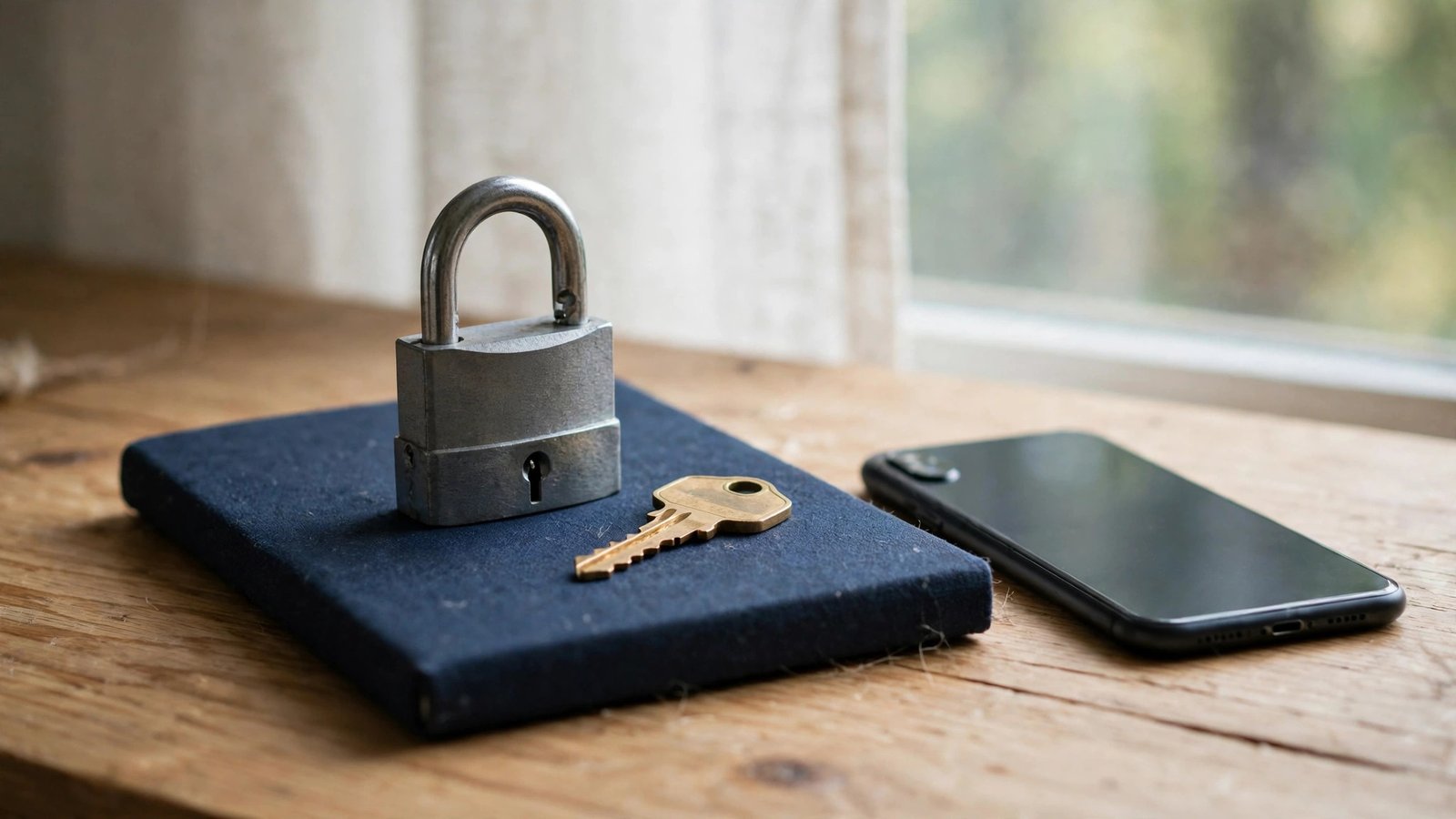
Think about how you protect your home. You lock the door, you do not hand copies of your key to strangers, and you would never tape your house key to the front gate with a note attached. Keeping crypto safe works exactly the same way — the rules are mostly common sense. The difference is that in crypto there is no locksmith and no insurance desk if something goes wrong. That is why learning how to keep crypto safe is not an optional extra. For a beginner, it is the main skill.
Here is the honest truth: most crypto is not lost because brilliant hackers broke unbreakable code. It is lost because someone was tricked, rushed, or careless — a fake website, a convincing message, a seed phrase typed into the wrong place. The good news is that ten simple rules will protect you from the overwhelming majority of real-world dangers. You do not need to be a technical expert to follow them.
Rule 1: Guard Your Seed Phrase Like Your Life Savings
Your seed phrase — those 12 or 24 words shown when you create a wallet — is the master key to all your coins. Anyone who has it can take everything, from anywhere in the world, in minutes. Write it on paper (or stamp it in metal for fire protection), store it somewhere private and secure, and never enter it into any website, app, or form. No real support team, exchange, or wallet company will ever ask for it. Anyone who asks is a thief, without exception. Also never store it as a phone photo, a screenshot, an email draft, or a cloud note — all of these can be quietly copied by malware or a hacked account.
Rule 2: Turn On Two-Factor Authentication Everywhere
On every exchange and crypto account you use, enable two-factor authentication (2FA). This means logging in requires your password plus a changing code, like a second lock on the same door. Prefer an authenticator app over SMS codes, because text messages can be intercepted if your phone number is hijacked. Write down the backup codes the service gives you and store them with your seed phrase — losing your phone without them can lock you out of your own account.
Rule 3: Use Strong, Unique Passwords
Never reuse your email password on a crypto site. If one website leaks its data, criminals automatically try the same password everywhere else — a technique called credential stuffing. Use a reputable password manager to create and store long, random passwords for every account. Your email account deserves the very strongest password of all, because whoever controls your email can reset almost everything else you own.
Rule 4: Bookmark Official Sites and Check Every Link
Scammers build fake websites that look identical to real exchanges and wallets, sometimes differing by a single letter in the address. Search results and ads can point to these fakes. Protect yourself by typing addresses manually or using your own bookmarks, and by checking the exact spelling before you log in or connect a wallet. Be especially careful with links sent by email, text message, or social media — that is the delivery route for most phishing attacks.
Rule 5: Start Every New Transaction With a Tiny Test
Crypto transactions cannot be reversed. If you send coins to the wrong address, they are gone. So whenever you send to a new address — especially a large amount — first send a very small test amount, confirm it arrived safely, and only then send the rest. Copy and paste addresses rather than typing them, and double-check the first and last few characters, because some malware secretly swaps copied addresses for the attacker’s own.
Rule 6: Keep Your Devices Clean and Updated
Your wallet’s safety depends on your phone and computer. Keep your operating system, browser, and wallet apps updated, because updates patch security holes that criminals actively exploit. Install apps only from official app stores, and be suspicious of any “wallet” that appears in an ad or a message. Consider using a separate browser profile — or even a dedicated device — for crypto, away from random downloads, games, and file-sharing sites.
Rule 7: Be Suspicious of “Support” and Giveaways
A huge share of crypto theft starts with a friendly message. Scammers pose as support staff in chat groups, reply to your public questions offering “help,” and promote giveaways claiming that if you send 1 coin you will receive 2 back. You will not. Legitimate companies do not contact you first on Telegram, Discord, or social media, and no genuine giveaway asks you to send money first. If an offer feels exciting or urgent, that feeling is the trap — real opportunities do not expire in ten minutes.
Rule 8: Spread Your Risk — Don’t Keep Everything in One Place
Just as you would not keep all your cash in one jacket pocket, avoid storing all your crypto in a single exchange or wallet. Many holders keep a small, convenient amount in a hot wallet or exchange account for everyday use and the majority in a cold hardware wallet kept offline. If one platform fails or one device is stolen, you do not lose everything at once. This rule also protects you from your own accidents, not just attackers.
Rule 9: Double-Check What You Are Approving
When you connect a wallet to a crypto app, you will be asked to approve transactions and sometimes sign messages. Read what the screen says before confirming. Malicious sites trick users into signing approvals that quietly give the site permission to move tokens out of the wallet later. If an approval request appears unexpectedly, asks for unlimited access to a coin you are not using, or comes with pressure to hurry — reject it and close the page. You can always return later; you can never undo a theft.
Rule 10: Plan for the Worst — Backups and Honest Conversations
Finally, prepare for ordinary disasters: fire, flood, theft, or simply forgetting. Keep your seed phrase backup in a second secure location if your holdings justify it. Store wallet PINs and 2FA backup codes carefully. Consider telling a trusted family member that your backup exists and where to find instructions — without sharing the phrase itself while you are alive and well. Good security is not just technology; it is a boring, written-down plan made on a calm day, before you ever need it.
Frequently Asked Questions
What is the single most important security rule?
Protect your seed phrase. Never share it, never type it into a website, and never store it digitally. Almost every other mistake can be survived; a leaked seed phrase usually cannot.
Can an exchange recover my crypto if I am scammed?
Usually not. Once a transaction is confirmed on the blockchain it cannot be reversed, even by the exchange. You should still report the incident to the platform and to local authorities, but prevention is far more effective than any cure.
Should I tell people how much crypto I own?
It is safer not to. Publicly discussing your holdings — online or offline — makes you a target for scams, phishing, and even physical theft. Most experienced holders stay quiet about amounts.
Are hardware wallets worth it for small amounts?
If your total holdings are small, a well-secured phone wallet and careful habits may be enough while you learn. As the value grows to an amount that would hurt to lose, a hardware wallet from the official manufacturer becomes one of the best-value protections available.
Conclusion
Keeping crypto safe is mostly about calm habits, not clever technology: guard your seed phrase, use two-factor authentication and unique passwords, verify every link and address, test with small amounts, and stay deeply suspicious of anyone who rushes or flatters you. Follow these ten rules and you will avoid the traps that catch most beginners — and you can explore the crypto world with far more confidence and far less risk.
Disclaimer: This article is for educational purposes only and is not financial advice. Cryptocurrency is volatile and high-risk — never invest money you cannot afford to lose.